About
My Story
Thank you for visiting my website.
I hope you find it both interesting and informative.
I have been studying and practising herbal medicine (or phytotherapy as it is sometimes known) for over 30 years and I still passionately believe using herbs to maintain and regain health is the most natural, safe and sustainable form of medicine for the 21st century.
Since humans walked the earth, plants have been used for health and now science is proving what people have instinctively known: plants have amazing healing properties.
As Hippocrates said ‘let food be your medicine and medicine be your food’.
Our relationship with plants is profound – we cannot live without them.
Andrea Denney
DipPhyt. MNIMH.
Herbal Medicine Works
Herbs are plants which may be used for culinary or medicinal purposes and herbal medicine involves the use of herbs to assist the body’s own innate ability for healing and repair.
Herbal Medicine has been used globally for thousands of years.
Some form of herbal medicine is practised in every culture and country in the world.
You may ask – Does it actually work, and if so, why?
Why?
Why Herbal Medicine Works
Herbs are plants which may be used for culinary or medicinal purposes and herbal medicine involves the use of herbs to assist the body’s own innate ability for healing and repair.
It has been used globally for thousands of years and some form of herbal medicine is practised in every culture and country in the world.
Does it actually work, and if so, why?
What we already know
Let us first consider what we already know about plants and the nourishment they provide to all animal life.
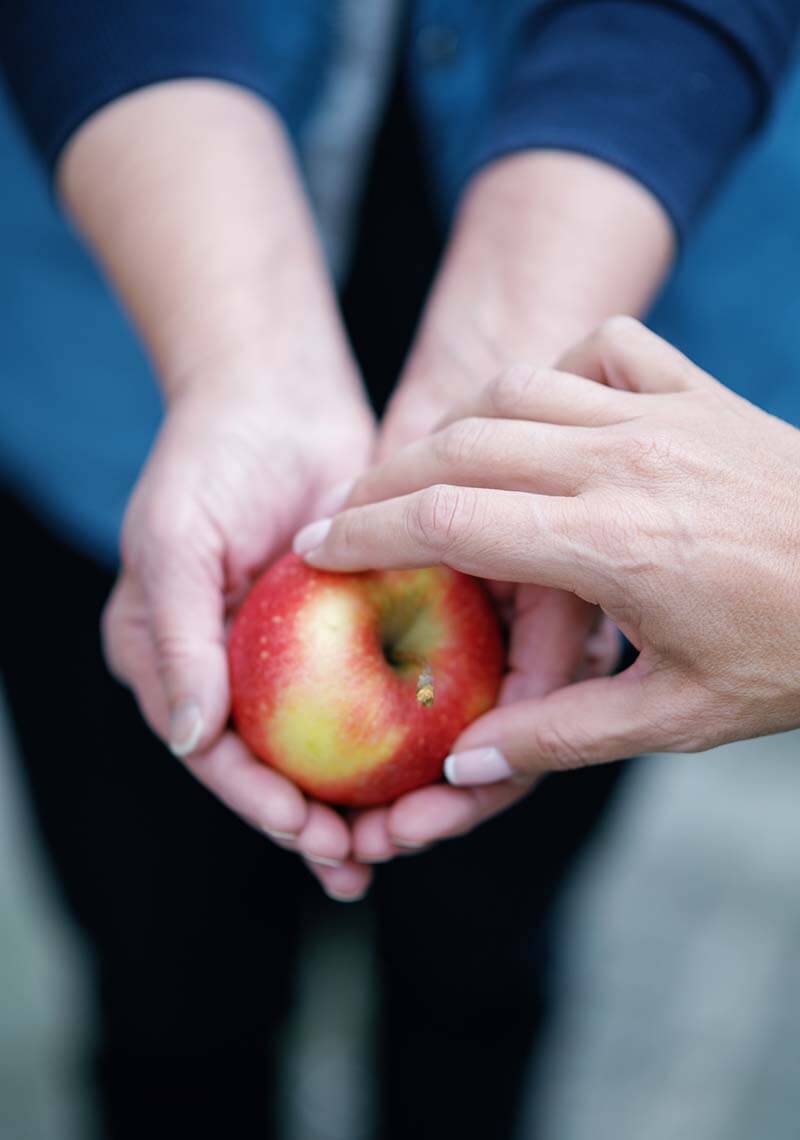
Most of us have heard the old adage “an apple a day keeps the doctor away” and strive to include our five a day of fruit and veg (plants!) in our diets.

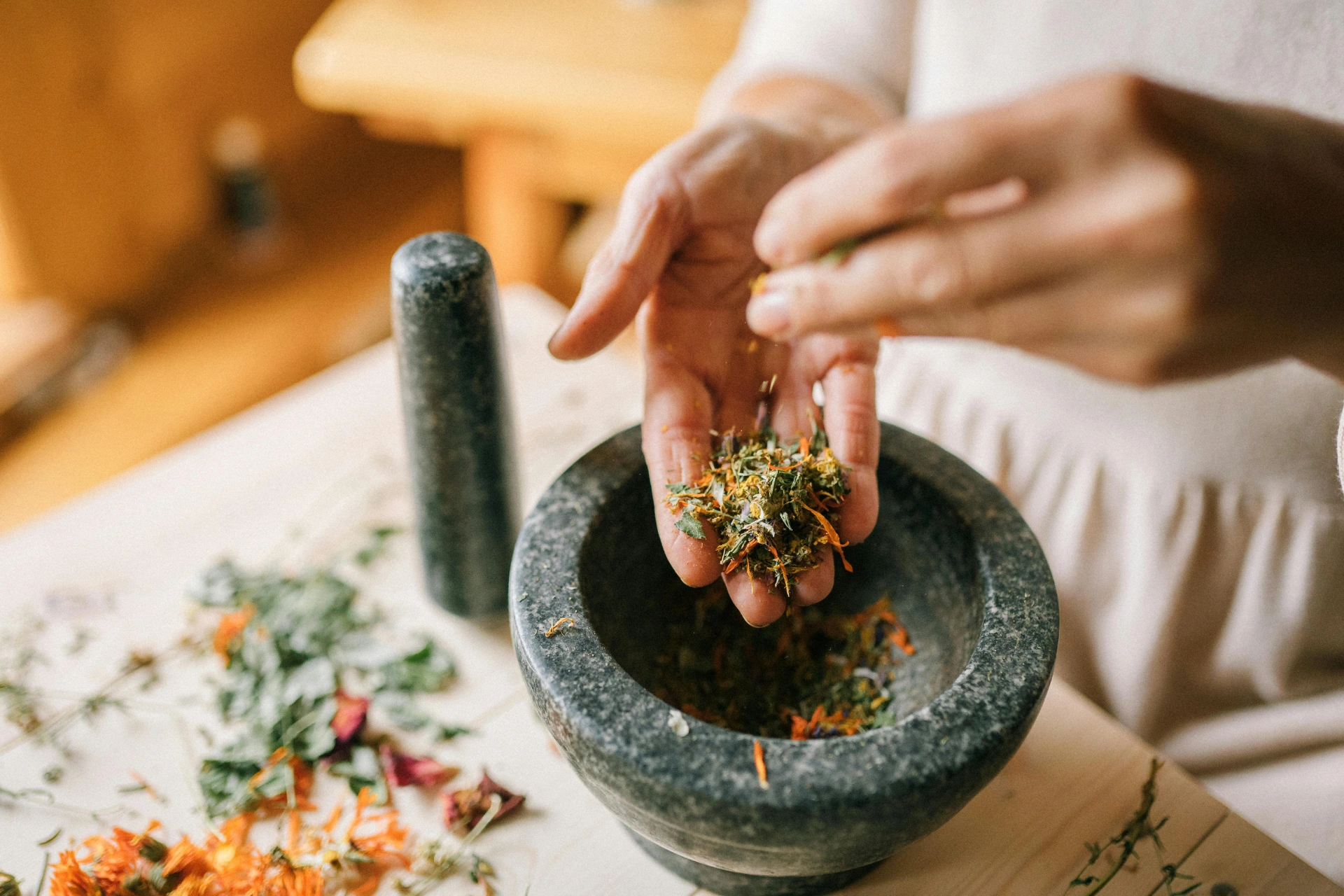
We know that some plants are good for us, for example broccoli, spinach, carrots, and that some plants are not – cannabis, tobacco, sugar cane. Such knowledge is built on the foundation that plants have the ability to affect us when we ingest them.
Some plants can provoke a reaction when we touch them (a nettle stings us), or smell them (the calming scent of lavender).
It therefore follows that we can harness this undisputed power plants have to induce chemical reactions in the body and use it to our advantage. Plants offer us a unique healing power, promoting health by strengthening and supporting the vitality of a weakened constitution due to illness or stress.
Challenges
With the challenges we face from the modern world and its affluence –
stress
pollution
obesity
diabetes
cardiovascular disease
drug resistance /side effects etc.
digestive issues
People are looking towards a different form of healthcare – one that can be tailored to meet their individual needs, benefiting their whole selves and working to restore balance and healing.
Risk of side effects is lessened
Plants have a complex chemical constitution making it difficult to pinpoint just one active part.
Broadly speaking the primary active principles are used by the plant for food and survival and the secondary active principles are the ones we use in medicine.
Herbalists tend to use the whole plant and in this way the digestive system recognises it as a natural foodstuff thereby the risk of side effects is lessened.
Many herbs also possess a tonic action, absent in conventional drugs, which helps to support the system generally.
Scientific Literature
Pharmaceutical research is carried out on plants in the search for new drugs and there is a growing body of scientific literature which supports the clinical efficacy of herbal medicine.
After all, many drugs in use today are derived from herbs.
Foxgloves gave us digitalis, willow provided aspirin and we sourced morphine from the opium poppy.
Almost since the beginning of civilization people have known that herbal medicine works but have been unable to explain why.
Nature Meets Science
Modern scientific developments are now enabling us to discover exactly what happens to the contents of natures’ vast kitchen once they are ingested, inhaled and applied.
Moreover, now we have made new breakthroughs in herbal medicine that our ancestors could only have dreamed of.
21st century medicine really is the place where nature meets science for optimum health.
Questions
Is herbal medicine safe?
One of the main advantages of herbal medicine is its comparative safety record as against conventional medicine.
While by definition, medicinal herbs have an effect on the body, adverse effects are rare.
Most herbs are quite benign in nature and can be used over long periods of time causing no ill effect.
However, some herbs can be toxic – even in small amounts or when used for prolonged periods and so it is strongly recommended that you seek professional advice for all but the most minor conditions.
Extra care needs to be taken when treating the elderly, people with liver and kidney complaints or during pregnancy.
As long as you are treated by a professional herbalist there is no cause for concern. They will be aware of any potential problems or contraindications for treatment.
What can be treated with herbal medicine?
Most problems you would see your GP with will benefit from herbal medicine.
Chronic problems such as digestive, hormonal, joint and muscular, respiratory and cardiovascular are seen frequently and herbal medicine excels with complex conditions where a diagnosis is often not straight forward.
Anxiety and stress often accompany or cause health problems and many patients have on reflection had a gradual build- up of poor health over a number of years resulting in multiple symptoms and a confusing clinical picture.
Herbal medicine allows us to peel back the layers of your illness and because your medicine can be adjusted, it gives much more scope for a successful outcome.
Am I able to take herbal medicine alongside medicines prescribed by my GP?
In around 90% of cases, patients are already taking medicines from their GP.
Certain herbs and drugs should not be combined, although at other times herbs and drugs can complement each other. This is an area where professional treatment is advised.
A medical herbalist will be aware of any possible interactions with your current medication and will prescribe your herbal medicine accordingly.
What if I have more than one concern?
Medical herbalists regularly treat more than one problem – in fact, it is probably fair to say it is unusual not to.
Herbs have numerous actions and a skilled herbalist will be able to choose herbs that work together to give maximum support for all your health issues.
Many herbs have a synergistic action, that is, the total action is greater than the sum of its parts, and a herbalist knows which herbs to combine for optimum effect.
Many patients have long-standing , complex problems, both physical and emotional. Herbal medicine is ideally suited for these.
Can I treat myself with herbs?
Often, minor ailments can be treated with over the counter herbal products.
Just as you may buy paracetamol for mild pains and headaches or cough mixes and antiseptic creams from the pharmacist, herbs can be used in a similar way.
However, if your condition worsens or is complex, or you are on lots of medication from the GP, then advice should be sought from a qualified herbalist.
Is herbal medicine similar to homeopathy?
No! It is totally different.
Homeopathy is a system of medicine which involves treating the individual with highly diluted preparations consisting of chemical, mineral, plant and animal sources.
It aims to trigger the body’s natural system of healing using a like treats like philosophy: that is, preparations believed to cause healthy people to exhibit symptoms are used to alleviate symptoms in patients.
Treatable Common Conditions:
Herbal medicine can be used for conditions affecting :
-
-
Digestive system and bowel issues
- Muscles and joints
- Nervous System
- Stress, depression, anxiety, fatigue
- Heart and circulation
- Hormonal System
-
Skin
-